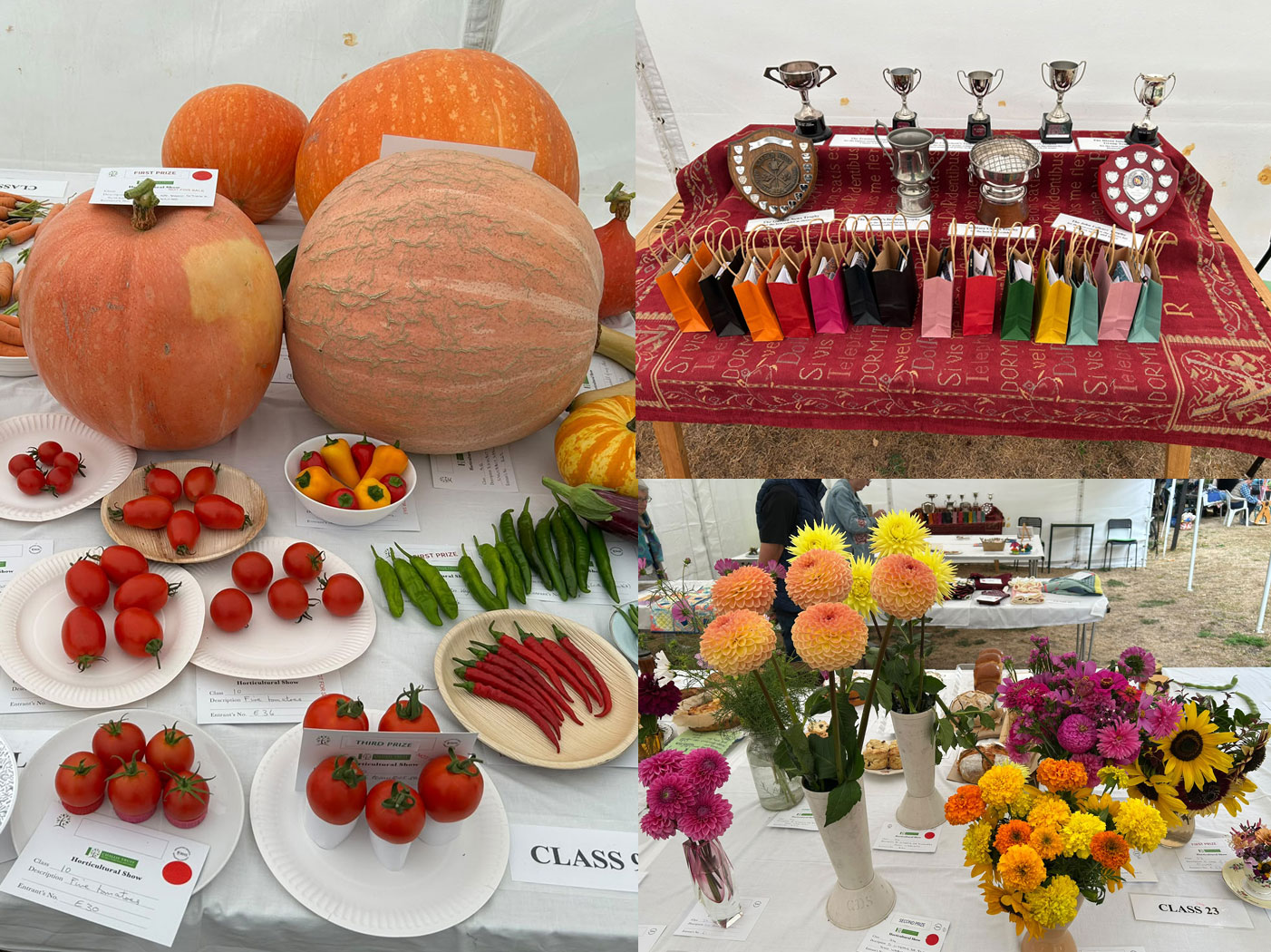
Our main event of the year ‘The Challis Horticultural Show & Fete’ was brought forward a week to the Saturday of the August Bank Holiday weekend to help boost participation in the Show. Despite a very demanding year for the gardeners, we were surprised – but delighted – to see a very impressive display of fruit, vegetables and flowers. In the event, there were more exhibitors and more entries than in 2025. Congratulations to everyone who contributed to the Show and thanks especially to all the helpers, volunteers and stallholders for making it a success. We will continue to hold this event in late August rather than early September in future.
We are indebted to Cambridge Flower Club for their flower-arranging demonstrations and to Kathlene Loughnane’s group of local musicians for entertaining us with traditional Irish folk music. The weather was not so good this year, rather damp, but the worst of the weather held off until late afternoon, so we were able to conduct the trophy presentations in the open, which was a relief. The late downpour actually played into our hands, as many people sheltered in the Show marquee just as the produce auction commenced. As a result, the bidding was very competitive, raising a significant sum for the Trust. Great fun! Thanks to Andy Jackson for handling the auction in his inimitable and entertaining style.
We are very grateful to Dr. Alan Gelson for presenting the trophies this year. Many villagers will know Alan as a long-serving and popular GP at the Health Centre. He knew Mary Challis well and has fond memories of visiting her at home when she needed medical attention. Alan was also one of the executors of her estate and was delighted to accept our invitation to participate in the Show.
Here are this year’s winners:
Trustees Trophy (most points in fruit & veg. classes): Mrs K Wells
Garden News Trophy (best exhibit in fruit & veg. section): Graeme Udall
Dixon Intl Group Trophy (best exhibit in domestic classes): Audrey Jackson
Mary Challis Trophy (best floral exhibit): Michael Wells
WI Trophy (best handicraft exhibit): Carol Bard
Sue Reeve Trophy (best exhibit in 8-12 age group): Joss Irons
John Falkner Trophy (best exhibit in 7 and under age): Yingji Wang
Chairman’s Trophy (family with most points in Show): Mr & Mrs Wells
Norman Carver Trophy (best exhibit in Show): Carol Bard
Mr and Mrs Wells continue their dominance of the fruit & veg and floral classes, picking up three trophies this year, a very impressive tally. Mrs Wells has won the Trustees’ Trophy for the 8th year in succession and the family winning the Chairman’s Trophy for the 10th consecutive year, which is outstanding! Mrs Wells gained the most points (31) in the fruit & veg section, Michael Wells came second with 25 points, Graeme Udall third with 21 points and Rosemary Aylward a very creditable fourth place with 19 points. Congratulations again to Graeme for winning ‘best in section’ for a stunning set of onions, considering the exceptionally dry conditions this year.
A special mention to Carol Bard – one of our Challis Garden volunteers – who won ’Best in Show’ for her stunning patchwork garment, which hugely impressed the judges. Well done, Carol!
The Sawston Branch of the Royal British Legion organised a social event in the Challis Garden on Sunday 6th September. Entertainment was provided by the local Rock Choir, the first time they’ve performed here, to great approval. The singing and choreography was exceptional, we sincerely hope they’ll come back again. Well done to everyone involved in arranging this event.
Our last event for 2026 is ‘Spooky Saturday’ on 31st October from 10 am to 12 noon. There will be all the usual activities: face-painting, pumpkin-carving, poster painting, giant garden games and a spooky trail. Refreshments will be available, with Andy’s home-made soups, cheese scones, teas & cakes and more. Do come along and join in the ‘spookiness’. Dress up for the event – and the weather – just hoping it’s a relatively mild day. We look froward to seeing lots of you there!
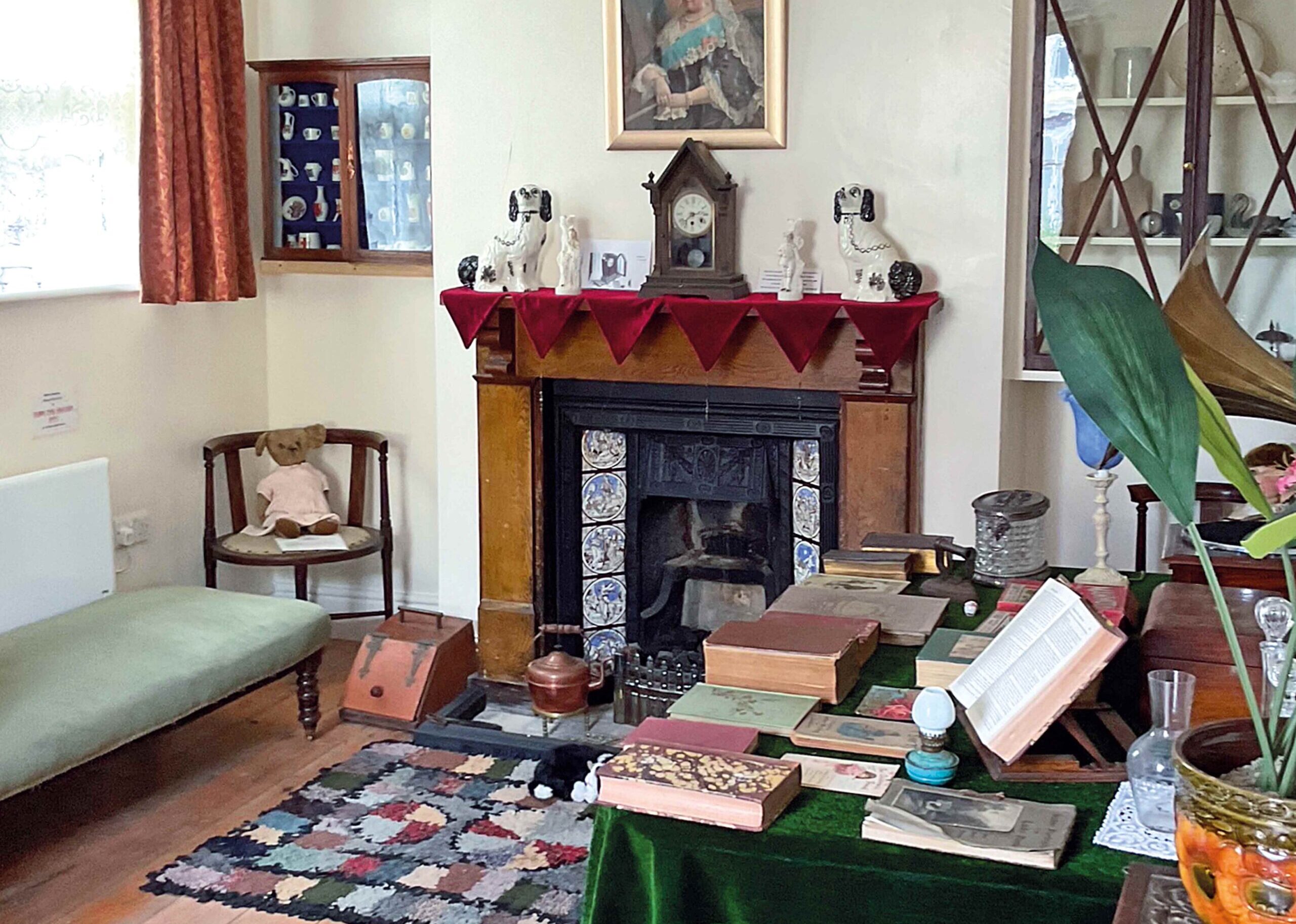
The current exhibition in the Reeve Building about ‘Trees in the Challis Garden’ will continue but without stewards. Visitors will be able to view the exhibition on request – just ask one of the garden volunteers to open up for you. You can visit on Tuesday, Thursday or Saturday mornings from 10 am to 12 noon.
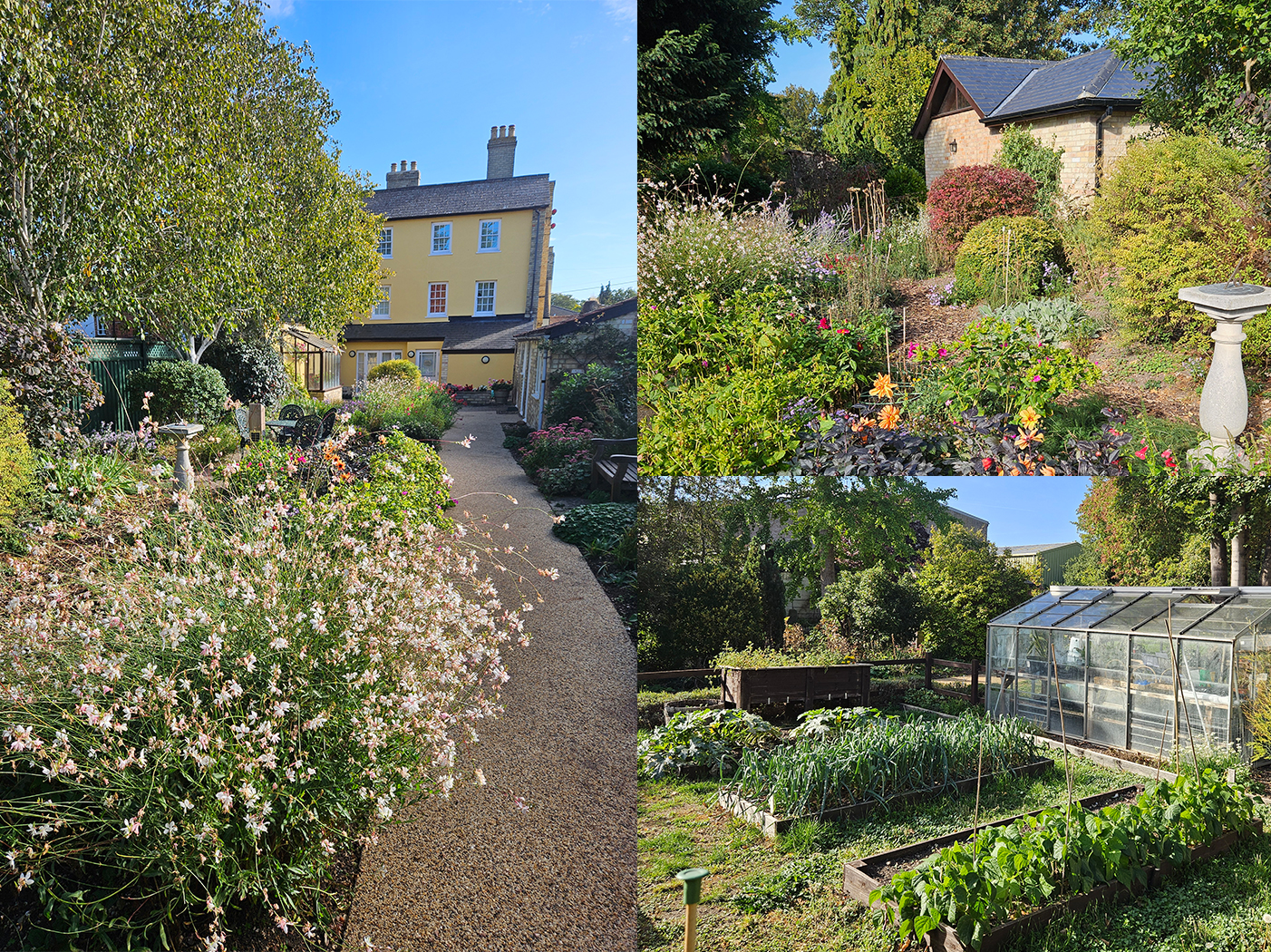
Our volunteers have worked very hard to maintain the garden as best as possible in very trying conditions. We are very fortunate to have our own borehole for watering, which we are allowed to use despite the hosepipe ban. It is a great relief to welcome a change in the weather to cooler, wetter conditions. Lawns have responded dramatically, greening up virtually overnight! Many plants succumbed to the prolonged heat and dry conditions, with some casualties, including some well-established trees and large shrubs. It remains to be seen whether these will revive next year. Remarkably, there is still a lot of colour in the main perennial beds, notably penstemons, Guara, salvias, Verbena bonariensis, asters, heleniums and Mirabilis jalapa. It’s the perfect time no to take stock of which plants have performed well this year, to help decide which of these perennials to use more of in the future.
In the Garden, we are committed to implementing practices to mitigate the effects of a changing climate. To this end, we are collaborating with the Climate Change Gardening charity, which is committed to advising gardeners on how to adopt practices to make their gardens more resilient to hotter and drier conditions. We aim to demonstrate such practices in the Challis Garden and to be a role model for this cause.
Visitors will notice the improvements to the gravel paths in the Garden. They have been upgraded to a resin-coated finish, which is both aesthetically pleasing and enhances accessibility for pushchairs, wheelchairs and walkers. We hope you like the changes! We are indebted to the Heritage Lottery Fund for providing a grant for this work, supported also by our local fund-raising team and income from events.
Mike Redshaw