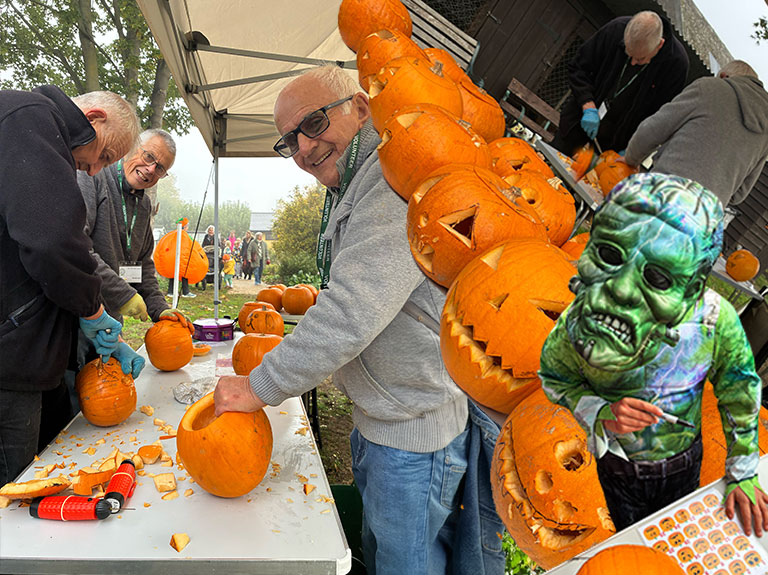
Our last event of the year ‘Spooky Saturday’ was held on the last day of October on a suitably atmospheric foggy morning. It is a very popular event in the village, always a good turnout of costumed children – and parents! The standard format seems to work very well, with face-painting, pumpkin-carving, mask-making and a Spooky trail. Many thanks to all the volunteers for helping out on the day. We’re indebted to the ‘girls’ from Let’s Run Girls for coming in early to scoop out 50 pumpkins, a great start to the day. Special thanks too to Gita Mistry and Ann Redshaw for designing the Spooky Trail with carefully crafted exhibits, and to the inflated pumpkin (aka Keena) for greeting all the visitors. A few bats and spiders went astray but will no doubt find their way back to the store cupboard!
In the Garden, we are making good progress on converting one of the herbaceous borders into a more climate-resilient planting that should cope better with the hotter and drier conditions we are now experiencing. We really do have to adapt to the changing climate and reduce the dependence on mains water in our gardens. The new planting will incorporate three plots: Mediterranean plants, prairie style planting and cottage garden plants. Over the next few years, we should see which plants and combinations thrive best in local conditions and we hope we can inspire visitors to adopt similar measures.
We do, of course, have a borehole water supply in the Garden, a luxury not generally available to most gardeners. However, we do not want to have to rely on this resource and spend a lot of time watering. It’s much better to change the plantings accordingly and minimise the use of annual bedding plants, containers and hanging baskets which all need frequent irrigation. It would be good to carry out these changes on a larger scale but it takes a lot of work and it’s relatively expensive to buy in large numbers of plants. We aim to do it progressively and based on the results from this first ‘trial’.
On the climate change theme, we are converting two of our raised beds to a ‘no dig’ plot and a ‘Hügelkultur’ plot. The latter is a practice from Germany that utilises waste organic matter in the garden to build up mounds (Hugel) in layers, interspersed with soil and compost. The system relies on the breakdown of organic matter to release nutrients slowly into the mound and to help retain moisture. The mounds should be self-sufficient over several years before the need to rebuild them. It is also a very effective way of using ‘waste’ plant material that is otherwise burned or sent to a recycling centre. Win win! It’s a first for us, so let’s see how it goes.
There will be a new exhibition in The Reeve Building next year about ‘Climate Change Gardening’ to complement practices in the Garden. Details will be publicised in due course.
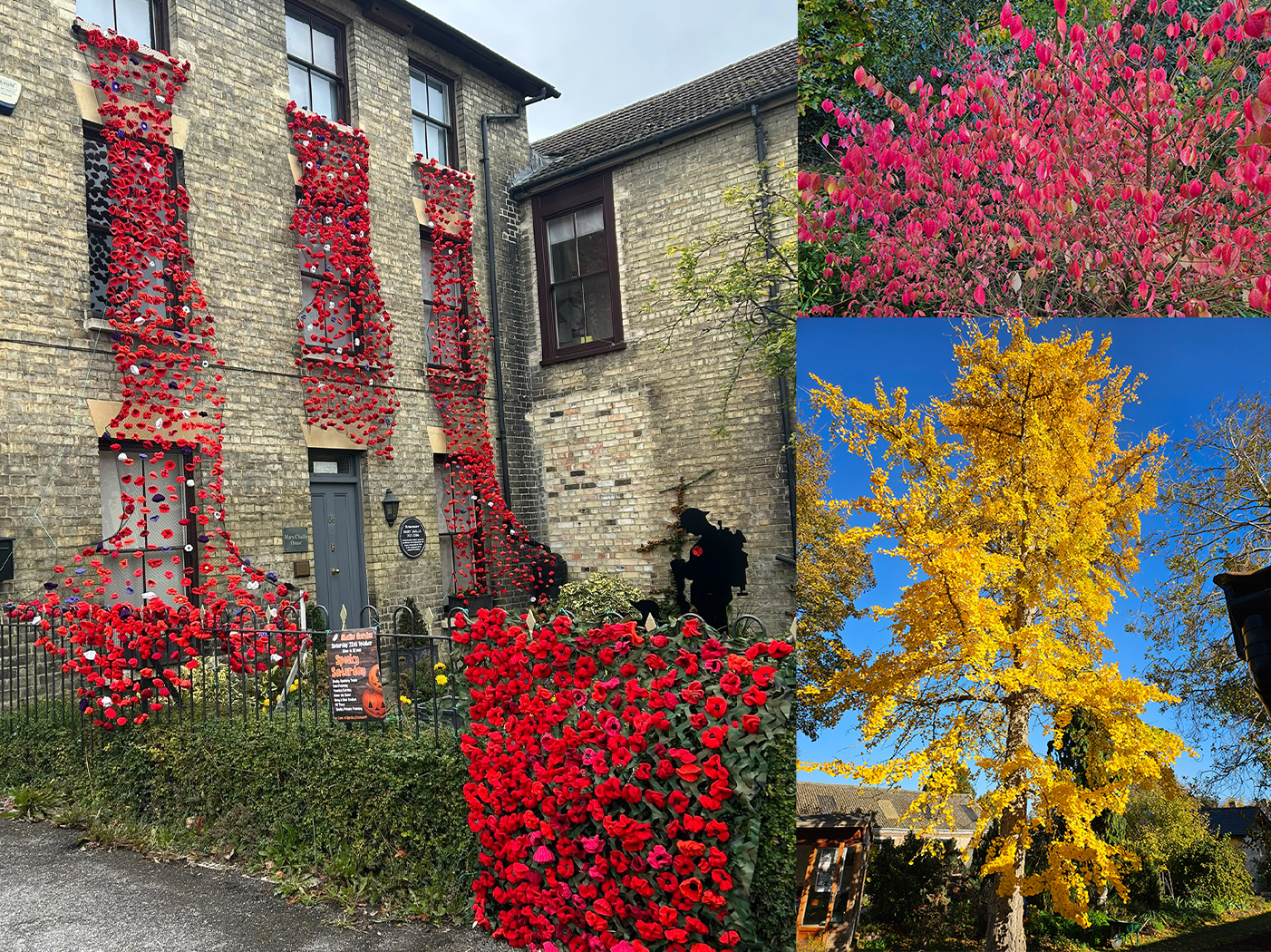
Shrubs and trees in the Garden are showing their true autumn colours now with yellow, red and rusty brown hues. The best examples are ginkgo, Persian ironwood, Nandina (sacred bamboo) and Euonymus alatus (burning bush). It appears to be a brief autumn season due to a prolonged moist and mild October, as plants held on to their green leaves to maximise nutrient retention. Leaves are starting to drop profusely, blanketing some areas; the garden team are collecting as much material as possible to make leaf mould for 2027. We will soon be spreading mature mulch on to herbaceous beds, tree circles, hedges and vegetable beds. It’s the busiest season of the year.
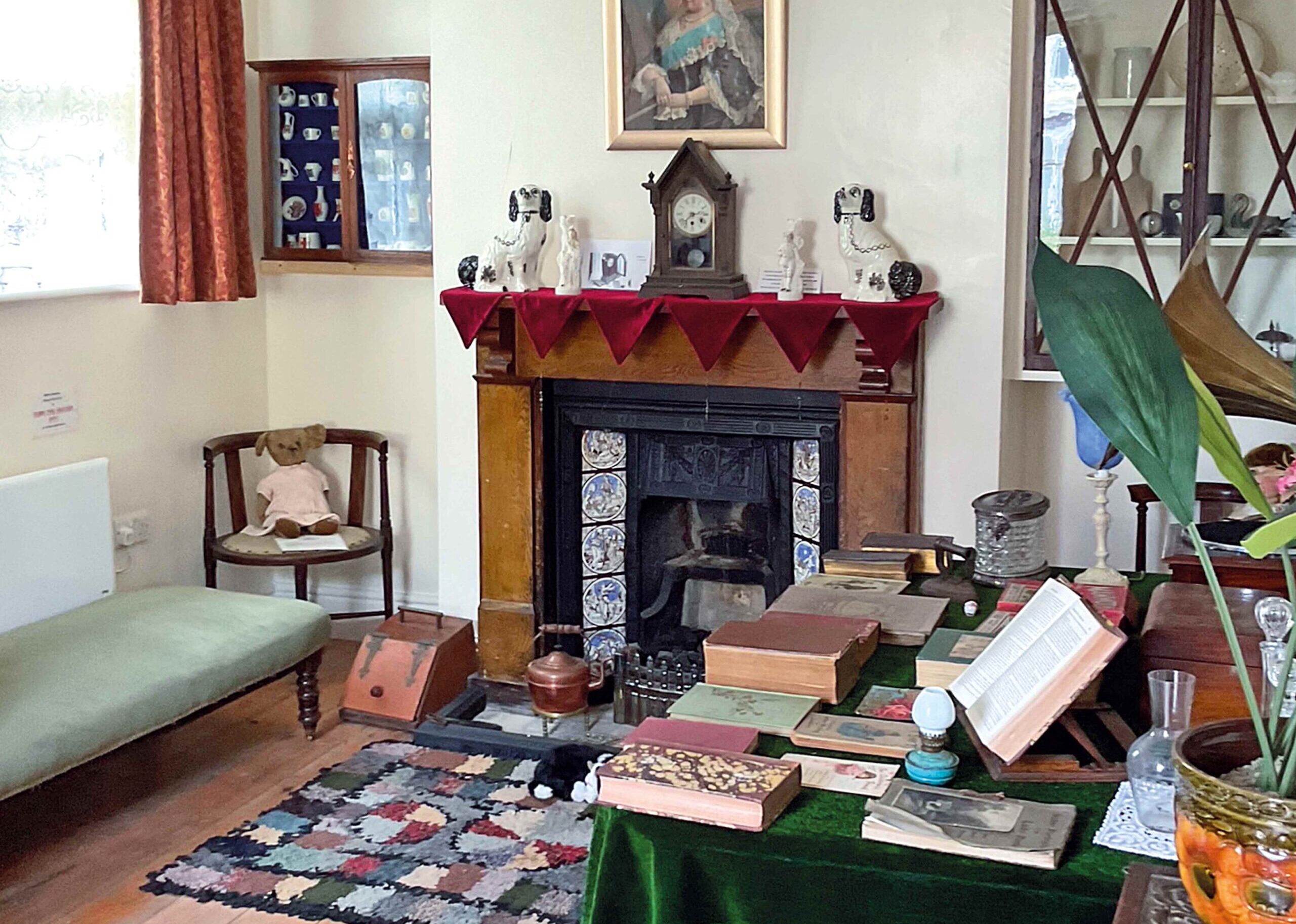
The museum and archives team in the Challis House are busy too, preparing new exhibitions, booklets and cataloguing. Despite putting up additional shelving this year, storage space is becoming increasingly tight so, of necessity, duplicate records and unwanted artefacts are being winkled out. We are still very keen to accept historical material of relevance to Sawston but have to be more discerning about what we can accept. However, do please continue to bring along items you think might be of interest for the museum.
The last exhibition in the House about Sawston High Street, which ran from April to August, proved to be very popular, attracting 422 visitors. This has now been taken down and replaced with an exhibition on the Sawston men who fell in WW1, which runs until the end of December. It was curated by Paul Whitmell with assistance from Sawston Youth Group (SYG) and supported by a lottery grant. All the men listed on the memorial cross at the end of Church Lane are documented; it is well worth a visit for anyone connected to these men.
The exhibition in the Reeve Building about ‘Trees in the Challis Garden’ is still available to visit, although it is not stewarded. Please let one of the garden volunteers know you are interested and they will open the building for you. It is available to view during normal opening hours on Tuesday, Thursday or Saturday mornings.
Passers-by have enjoyed the colourful poppy display at the front of the House on the High Street, along with the iconic soldier silhouetted against the wall. This has become an annual feature of the Remembrance commemoration in the village every November. The Challis Trust is very pleased to support the Royal British Legion in their mission. Lest we forget!
Mike Redshaw